




Billboards are a great canvas for advertisers’ messages. Unfortunately, vandals see them that way, too. While billboard vandalism — or tagging — isn’t pervasive, it’s enough of a problem to warrant concern. Following our best practices can help prevent this common issue and the financial headaches that come along with it.
Why Does Billboard Vandalism Happen?
Vandalism usually stems from a mix of artistic expression, political protest, or simple boredom.
- Political and Social Statements: Controversial topics like religion, politics, or sensitive social issues often act as lightning rods for tagging. Sometimes this is even organized pushback. Groups like Brandalism or Billboard-Utilising Graffitists Against Unhealthy Promotions (B.U.G.A. U.P.) unabashedly target ads for products they find harmful — like fossil fuels or tobacco — as a form of “culture jamming.”
- Public Backlash: If an ad is perceived as offensive or insensitive, it can spark retaliatory vandalism. For instance, a Michigan plastic surgeon’s billboard featured two muffins wearing jeans with the message “friends don’t let friends muffin top.” Someone added smiley faces and spraypainted “you’re beautiful!” above them.
- Public Space Concerns: Some activists see billboards as “visual pollution” or “attention theft,” vandalizing them to reclaim public space from commercial interests.
- Thrill and Boredom: Anecdotally, a lot of graffiti is done by young men who are bored or can’t resist peer pressure.
How Often Does Billboard Tagging Happen?
While exact national percentages for billboards are hard to pin down, broader vandalism trends paint a clearer picture of when and where it’s likely to happen. Vandalism claims spike around holidays like Halloween (81% above average), New Year’s Day, and July 4, when people have time on their hands.
Taggers target static billboards rather than digital ones because they provide a physical surface that holds paint longer. Wild Posting® also invites vandalism because it’s close to the ground and easy to reach.
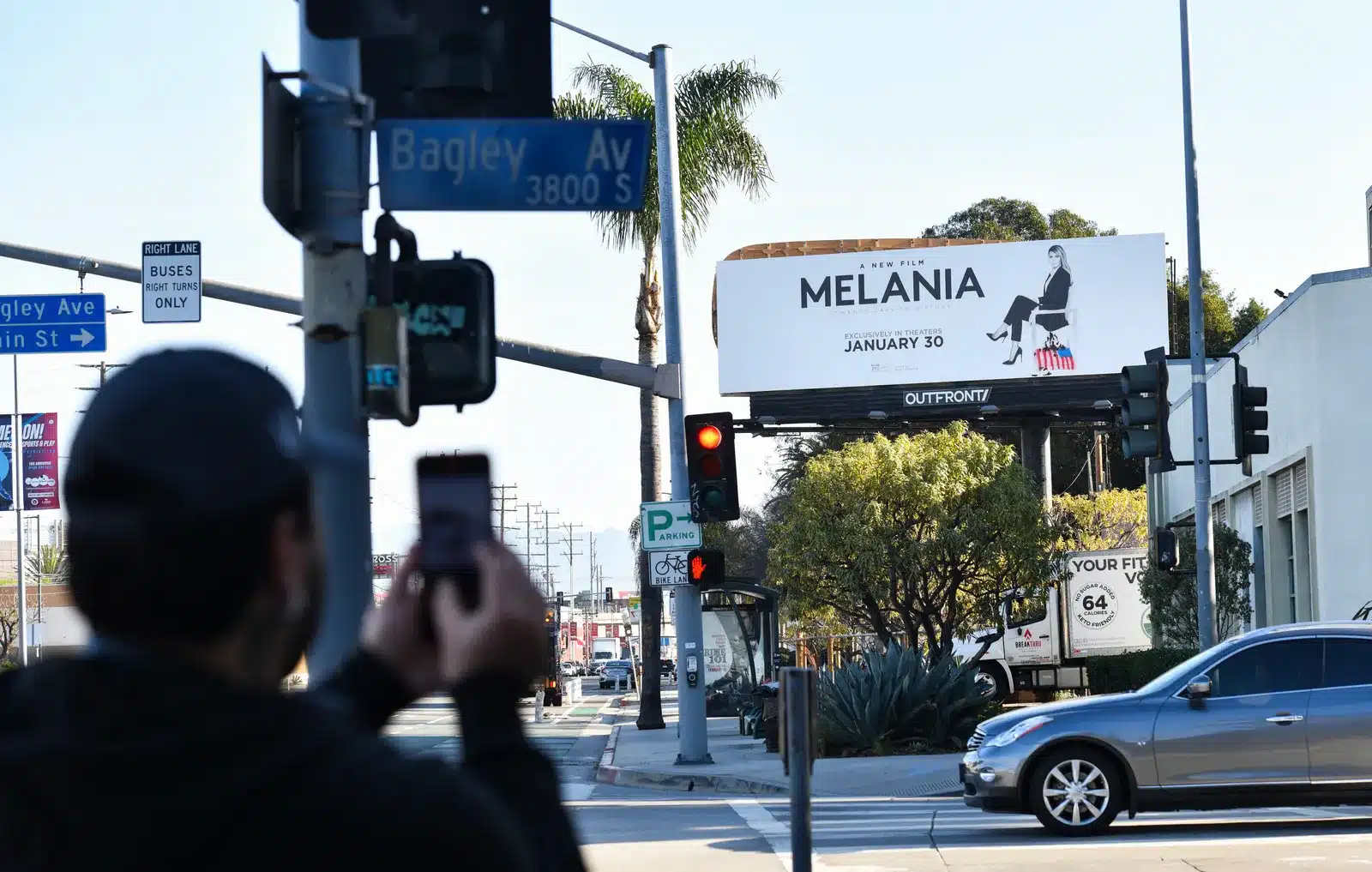
High-profile cases may make vandalism seem more prevalent than it actually is. Most recently, taggers went after boards for First Lady Melania Trump’s Amazon-produced documentary Melania — drawing an American flag beneath her and making it look as though she was literally shitting on the Stars and Stripes. They similarly targeted buses and transit stations running the ads.
Effective Prevention Strategies
The most effective way to prevent vandalism is to make the billboard a hard target:
- Embrace Anti-Climbing Aids: Welding channel iron over electrical conduits or cutting the bottom few feet off access ladders makes it difficult for vandals to climb to the deck.
- Shielding and Coatings: Anti-graffiti laminates or coatings don’t always stop the tagger, but they make cleanup significantly easier and faster, often allowing paint to be removed with just a pressure washer and some elbow grease.
- Lighting and Surveillance: Motion-sensor lights and visible CCTV cameras are strong deterrents, as most taggers rely on darkness to avoid detection.
- Reward Notices: Posting signs offering rewards for information about vandalism can sow distrust among teams of taggers, discouraging them from taking the risk — even if you have no intention of actually providing a reward.
- Rapid Cleanup: Vandals are discouraged when their work is removed quickly. Research by Graffiti Hurts, a grassroots community education program, finds that scrubbing graffiti within 24 to 48 hours results in a nearly zero recurrence rate.
5 Ways Advertisers Can Avoid Tagged Billboards
Advertisers can be proactive by carefully choosing their placements and response strategies. Here are five we recommend:
- Skip the White Background. An open white canvas screams “tag me.”
- Avoid Photos or Illustrations With Big Toothy Smiles. Taggers can’t resist the opportunity to blacken teeth — or worse, paint certain objects jammed in those teeth, like in season one of Cobra Kai.
- Avoid Boards With Ladders or Blind Spots. While you can cut off the bottom to discourage climbing, determined taggers can often find a way up. Also avoid “blind spots” — areas with heavy cover from nearby buildings where a vandal could work unnoticed.
- Try Overage Printing. For high-risk areas, some advertisers print 10% extra posters so that if one is vandalized, the vendor can replace it immediately without waiting for a new print run.
- Go Digital. Digital billboards are much harder to tag physically. While they can be hacked, they are generally safe from traditional spray paint.
Sometimes Tagging Isn’t Bad
Usually it’s awful when your billboard gets vandalized, but sometimes it’s actually a good thing. Here are five reasons why.
- Vandalized Billboards Get You More Attention 👀
Billboards can be clever, fun and an endless source of cool social media backgrounds. But billboard controversies spark headlines. TV news stations and local bloggers film and write about billboards that have been tagged. One law firm in Georgia has generated tons of free publicity from this gimmick over the years. - Vandalized Billboards Stand Out in a Crowded Market 📣
Most billboards are located near other billboards. To stand out, you need to look different, and tagged billboards certainly do. They have bright colors and edginess. As long as the graffiti doesn’t obscure important info on the billboard, like a date or URL, you may get more people looking at your vandalized board. - Vandalized Billboards Can Look Cool 😎
Agencies design billboards with purpose and care. But graffiti artists are called artists for a reason — they do amazing work. We’ve seen so many boards with cool tags that we wouldn’t have noticed otherwise. - Vandalized Billboards Create Authenticity 🖌️
Brands targeting millennials and Gen Z can use graffiti to convey an edgy or urban vibe. By allowing or commissioning this art, brands like Gucci and Adidas aim to connect with people who see value in street art. In Brazil, Nike even invited street artists to spray paint the brand’s new shoes onto feet on existing murals. - Vandalized Billboards Can Be Fakes
Sometimes the graffiti is the whole point of the board. An ABC campaign for the popular drama Lost sprayed graffiti on billboards advertising fake companies that directed people to the show’s Find Flight 815 website, making it look like the boards had been tagged.
Keep Your Billboards Tag-Free
We know the tricks to avoid unwanted graffiti on billboards. Contact us today to discuss your options.