




The 2024 Presidential Election brought billboards into the spotlight as a major media format across battleground states — Wisconsin, Georgia, Pennsylvania, Nevada, and Arizona. Cutting, provocative billboard messages hit the streets across all of them.
Nevada saw a wave of pointed billboards in the lead-up to the election. Here’s one example:
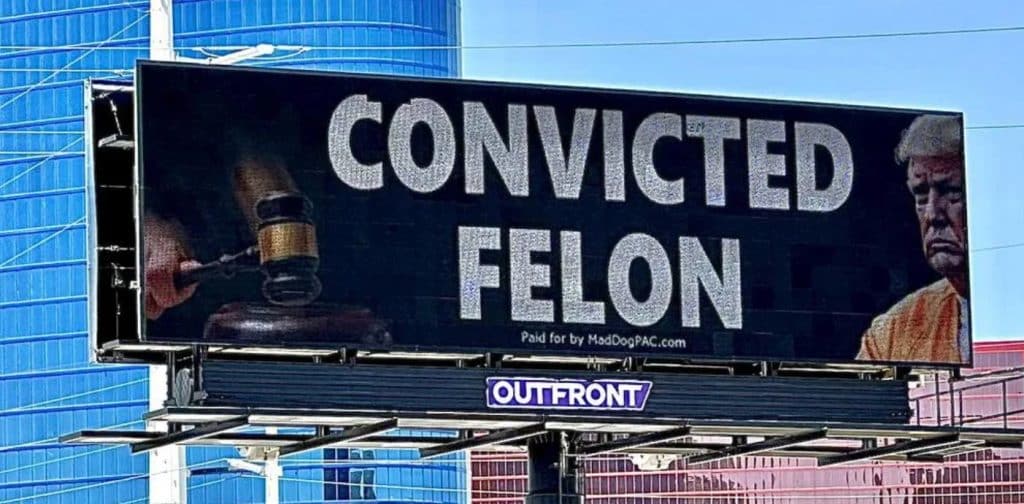
Billboards Will Boom in Political Advertising
At a time when traditional television viewership is declining and traditional media has seen significant drops in ad spending, it seems surprising that more political money hasn’t flowed to outdoor advertising.
Out of home has been one of the few traditional media segments to not just hold up but actually grow amidst the rising popularity of new media. So why hasn’t political spending followed?
“In the past, political ad spending heavily utilized TV advertising to achieve broad reach in target markets, but in recent years, we’ve seen a migration to online due to the ability to target and hyper-target key voters,” says Kym Frank, president at Geopath.
That may be changing. Analysts are seeing a gradual shift toward more OOH spending by political campaigns, particularly at the regional and local level. “We will have to wait to see the final tally once election season is over, but just from what I have been hearing and seeing, OOH certainly does appear to be playing a factor in regional and local elections at least,” Frank notes.
Here’s a look at what’s been holding billboards back — and how that’s evolving.
1. Billboards Are Best Used for Branding
Traditionally, businesses purchase billboards to build brand awareness — and for good reason. You see a billboard only long enough to absorb a short, impactful message, and that’s exactly what branding is all about.
In a presidential race, the candidates have already established their brands long before Election Day. Voters aren’t wondering what the major candidates stand for — and billboards aren’t well suited to carrying complex policy arguments or nuanced messaging. When your audience already knows who you are, a billboard’s strengths as a branding tool become less relevant.
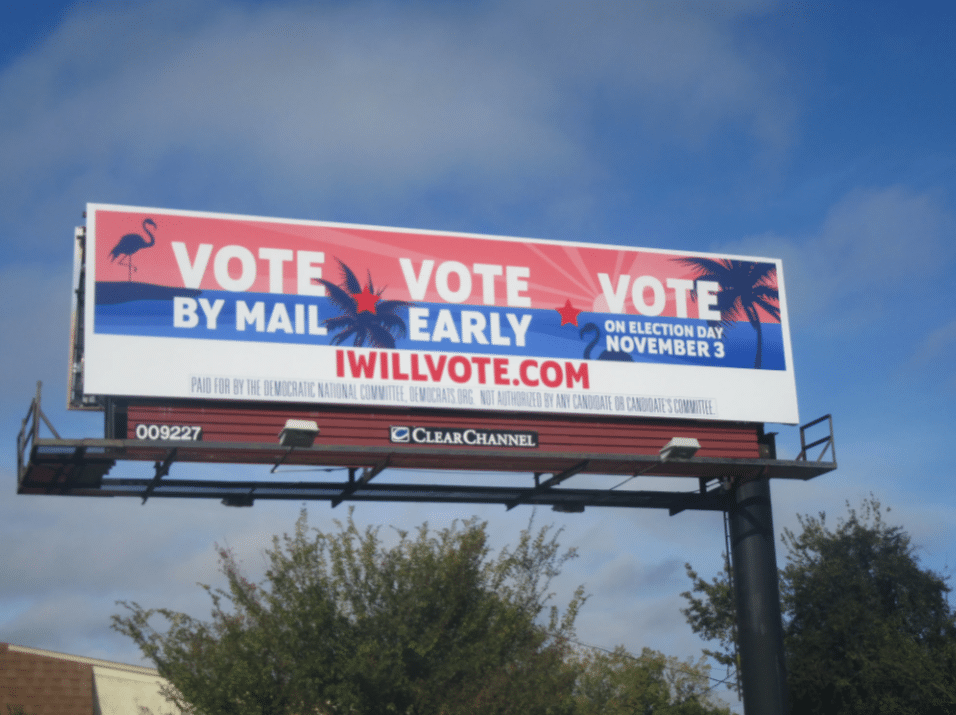
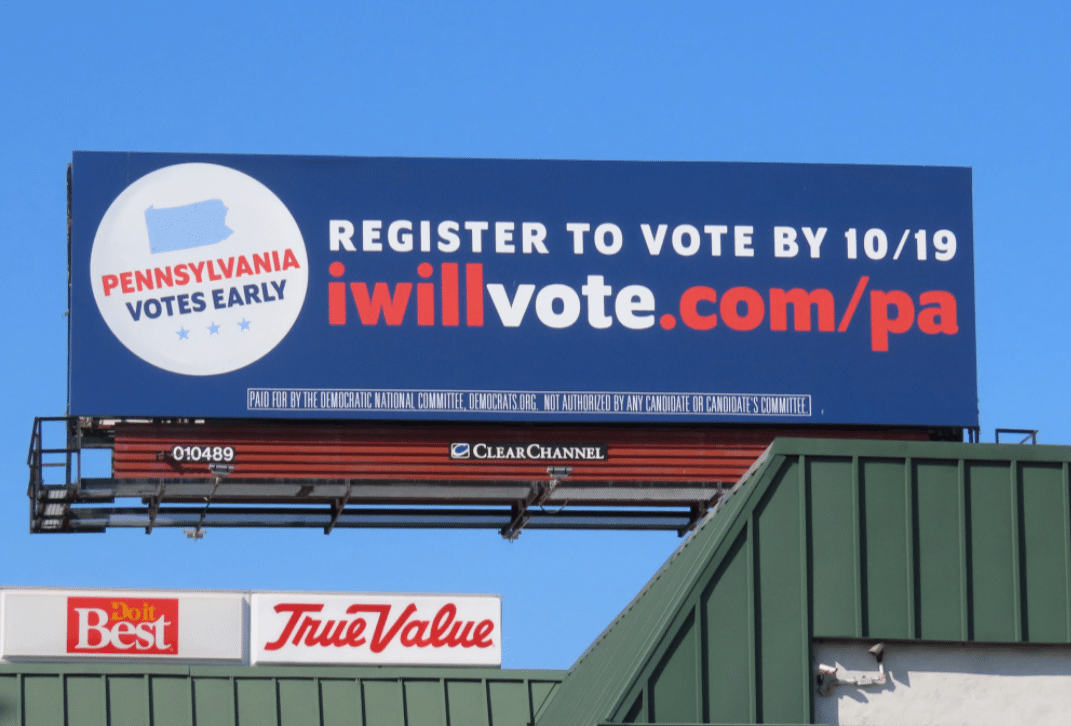
Where billboards do work in political campaigns is with sharp, simple, emotionally resonant messaging — attack ads, single-issue statements, and location-specific calls to action like voter registration drives or polling place reminders.
2. It’s Easy to Fact-Check Billboards
Television ads can deliver layered messages with enough nuance to elaborate on — and sometimes obfuscate — claims within a 30-to-60-second window. Billboards don’t have that luxury. They need clear, concise information to be effective, which means every claim is right there in plain sight and easy to fact-check.
A misleading or inaccurate billboard can become a liability fast. Unlike a TV spot that airs and disappears, a billboard stays up for weeks — giving journalists, opponents, and fact-checkers plenty of time to scrutinize the message and generate negative coverage. For political campaigns that depend on controlling the narrative, that’s a real risk.
3. Politics Is a Traditional Business
Political campaigns are notoriously slow to adopt new advertising methods. Until the people running campaigns fundamentally change their thinking, old habits won’t go away — even when the data suggests they should. Television has long been perceived as the dominant political medium, and that perception drives spending decisions regardless of whether the audience is still watching.
It took decades for digital advertising to pull a meaningful share of political ad budgets, and even now its share is lower than you might expect given how much time voters spend online. The shift toward OOH will likely take even longer — not because billboards aren’t effective, but because the people writing the checks are still operating from a TV-first playbook.
4. Sometimes It Isn’t Worth It
Billboard owners operate on thin profit margins, and in a deeply divisive political climate, running political ads at all carries real risk. The Trump campaign filed several lawsuits against media companies — including a tiny TV station in Wisconsin over a claim it called defamatory. Other stations ran the same ad without incident, but this one was singled out. The suit was expensive and widely seen as a warning shot. For smaller billboard vendors, that kind of legal exposure isn’t worth the revenue.
Will Political Spending on OOH Rise in the Future?
In a word, yes — though it’s worth remembering that growth is coming from a very small base.
Most analysts foresee higher political billboard spending compared to previous election cycles. Several factors are driving this shift:
- Social amplification: Interesting billboards get shared on social media, making your dollar go further. When Michael Bloomberg bought billboards with sarcastic one-liners about Donald Trump, they spread across Twitter and Instagram organically.
- Strong value relative to other media: CPMs and billboard pricing remain relatively low compared to TV and digital, making OOH an attractive option when budgets need to stretch.
- Mobile retargeting: OOH can be paired with mobile follow-up ads targeting people who have already seen a billboard. “OOH offers the ability to retarget individuals who have seen OOH ads with mobile ads. This allows the reach of other advertising channels to be amplified,” says Kym Frank of Geopath.
- Digital flexibility: Digital billboards can be updated quickly — a major advantage when political messaging shifts by the day. When Biden tabled his negative ads after Trump contracted COVID, digital OOH could pivot immediately.
OOH also has a unique ability to reach people who actively avoid advertising — young adults who stream content on-demand, skip pre-rolls, and use ad blockers. They can’t skip a billboard.
“The ‘ad avoiders’ are also more likely to be in locations where there are out of home ads, as they are 26% more likely to say they are regular moviegoers, 14% more likely to have traveled domestically, 65% more likely to take a bus, and 14% more likely to take other forms of public transportation like subways or trains,” Frank says. “On average, ‘ad avoiders’ travel 19 miles more per week than the total population — giving them that many more opportunities to see an OOH ad.”
We’d love to see more political ads on billboards — it’s a fantastic medium with enormous room for creativity. The data suggests that shift is coming, and the 2024 election cycle may be the tipping point.