
Outdoor Advertising
Wild Posting® in Boston and Surrounding Areas
Pricing, Best Neighborhoods, and How We Run Campaigns in Boston
We work with companies like…




Cost of a Wild Posting® Campaign in Boston
Boston has the densest college-and-creative-class pedestrian market in the Northeast, packed into a compact geography. What you pay depends on three things: which neighborhood, how many surfaces, and how long the campaign runs. Walkable corridors like Newbury Street, Harvard Square, and the Seaport command a premium over mid-corridor stretches — and within Greater Boston, Cambridge and Somerville run higher than Allston, Brighton, or Jamaica Plain.
Here’s the honest range we see on real campaigns:
Value neighborhoods (Allston-Brighton, Jamaica Plain, East Boston, parts of Dorchester) $2,500 to $3,500
Strong walkable foot traffic from college students and young residents. Allston-Brighton alone covers BU, BC, and a dense 20-something rental base — value-driven brands hit a young audience without paying Newbury Street prices.
Core Boston corridors (Fenway / Kenmore, South End, Cambridge, Somerville, Davis Square) $3,500 to $5,000
This is the bulk of what brands run. Fenway, South End, Cambridge, Somerville — strong foot traffic at a reasonable spend, with Cambridge / Somerville pulling in the Harvard / MIT / Tufts academic crowd.
Premium corridors (Newbury St / Back Bay, the Seaport, Harvard Square) $5,000 to $8,000+
Boston’s highest-demand surfaces. Worth it for fashion, beauty, luxury, and culture-driven launches where the neighborhood IS the message.
Cheapest Areas to Run Wild Posting® in Boston
- Allston / Brighton
- Jamaica Plain
- East Boston
- Dorchester (mid streets)
- Roxbury
Most Expensive Areas to Run Wild Posting® in Boston
- Newbury Street / Back Bay
- Seaport / Innovation District
- Harvard Square
- Boylston Street (Fenway)
A typical first campaign for a brand new to Boston lands between $3,000 and $6,000 — enough density to make an impact without overcommitting before you’ve seen results.
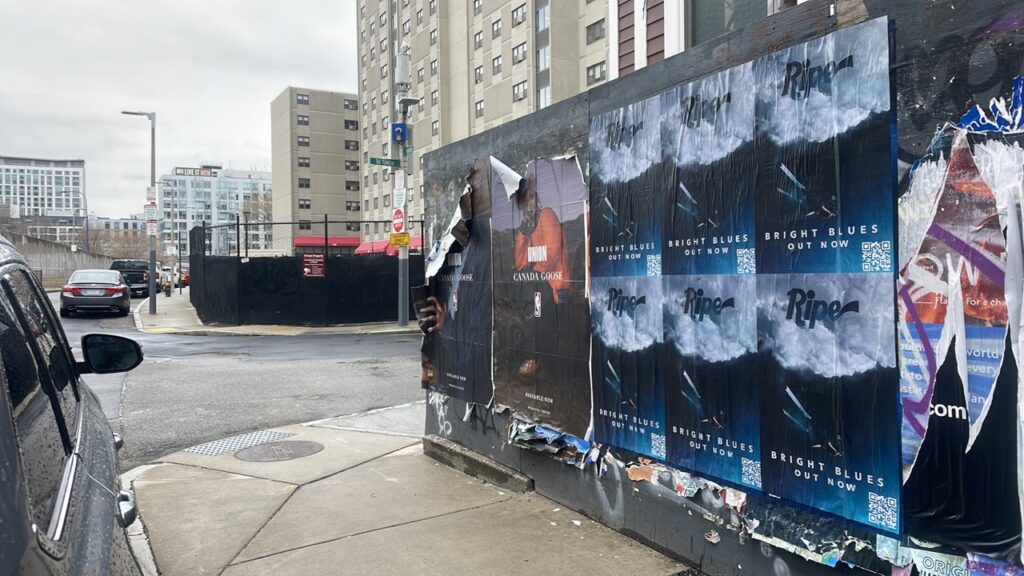
Where to Run Wild Posting® in Boston
Boston’s strength as a Wild Posting® market is that every neighborhood reaches a different audience. Picking the right corridor matters as much as the creative on the poster. Here’s where we recommend running, and who each neighborhood actually reaches.
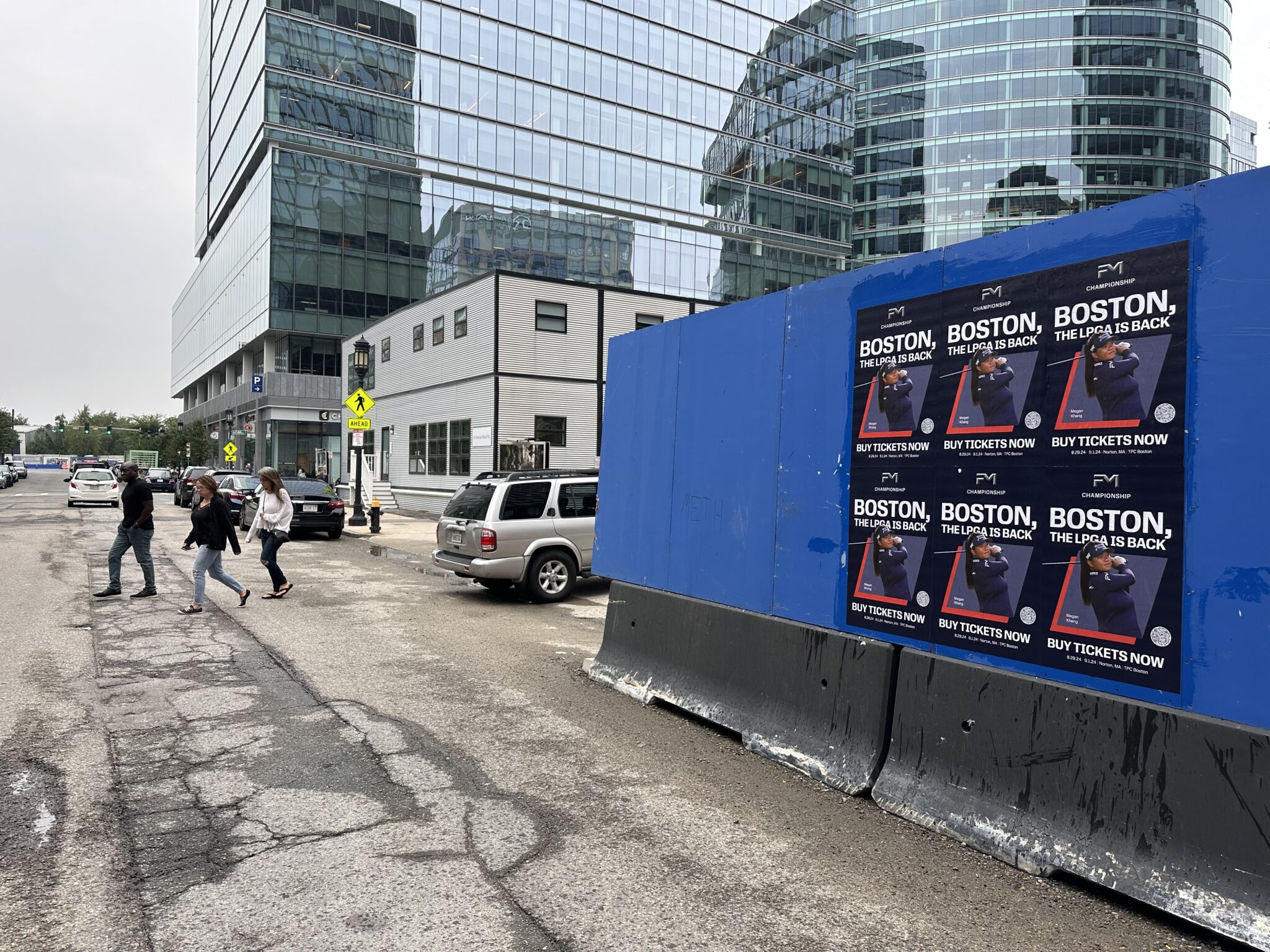
Newbury Street / Back Bay
Flagship retail, brownstone walk-ups, and a steady mix of affluent residents, Back Bay shoppers, and Copley Square office workers. The most-walked premium corridor in Boston — and the highest expected impressions of any market we serve. Best for fashion, beauty, luxury, hospitality, and lifestyle launches.
Allston-Brighton (Harvard Ave + Brighton Ave)
The cultural anchor of young Boston — BU and BC students, indie music venues, late-night food, and a dense rental base of 18-to-28-year-olds. The Harvard Ave / Brighton Ave / Comm Ave triangle pulls one of the most concentrated student-and-young-resident pedestrian flows on the East Coast. Natural home for streetwear, sneaker drops, music releases, challenger fashion, and food / beverage targeting Gen Z.
Harvard Square / Cambridge
Academic prestige, tourists, students, and Cambridge professionals all converge on Mass Ave and JFK Street. Harvard, MIT proximity, and the steady tourist flow to Harvard Yard make this the densest mixed-audience corridor in Greater Boston. Best for education, books / media, tech, fintech, hospitality, and any brand wanting an intellectual halo.
Fenway / Kenmore
Music, sports, and student-heavy. Fenway Park anchors Lansdowne Street, with the House of Blues, MGM Music Hall, Berklee, and BU all within a few blocks. Game days and concert nights produce some of the highest pedestrian density Boston ever sees. Strong for music, sports, beverage, gaming, streaming, and event-driven brands.
Somerville / Davis Square
Boston’s indie-creative anchor. Davis Square’s Red Line stop puts the Tufts crowd, Somerville artists, and Cambridge spillover at one intersection — and the Highland Ave / College Ave corridor stays walkable into the night. Strong for art-forward, music, indie food / beverage, lifestyle DTC, and culture-driven challenger brands.
Seaport / Innovation District
Boston’s newest premium corridor. Biotech, finance, and tech offices anchor the daytime crowd; luxury hotels, waterfront restaurants, and rooftop bars carry it into the evening. Seaport Boulevard’s new-build construction creates rare wall and barricade surfaces. Ideal for tech, fintech, luxury hospitality, premium DTC, and B2B brands targeting decision-makers.
South End / SoWa
Quieter than the Seaport, with a designer-creative resident base and one of Boston’s strongest restaurant rows along Tremont and Washington. The SoWa arts district adds Sunday-market foot traffic and a steady gallery / studio crowd. Strong for design-led DTC, lifestyle, craft food and beverage, and brands targeting an older creative-professional audience.
Downtown Crossing / Faneuil
Maximum tourist density and constant pedestrian flow — Faneuil Hall, Quincy Market, and the Freedom Trail funnel millions of visitors a year. Office workers, conventioneers, and downtown shoppers add weekday density. Good for entertainment, hospitality, streaming launches, and event-driven brands prioritizing reach over neighborhood fit.
How DASH TWO Runs Wild Posting® Campaigns in Boston
Boston Wild Posting® isn’t a media buy — it’s an operations problem. Posters get covered, torn down, weathered, and competed for surface by surface, day by day — and in winter, freeze-thaw cycles add a layer most other markets don’t deal with. What separates a campaign that delivers from one that disappears is execution: knowing which surfaces stay up, which property owners are cooperative, which crews to use, and how to refresh mid-flight when high-traffic corners get covered.
Here’s what running a Boston campaign with us looks like:
1. Audience-first site selection.
Choosing Newbury Street when the audience is in Allston wastes money — and vice versa. We start with your audience, not a fixed inventory of surfaces.
2. Legal and permit handling.
Boston surfaces include construction barricades, scaffolding, and tolerated postering walls. Each has different rules, and the City of Boston ISD enforces sign regulations actively. We secure permissions, work with property owners, and stay compliant. You don’t see any of it.
3. Production-ready creative specs.
We send exact dimensions, bleed, and material specs before you commit budget. No reprints, no surprises at install.
4. Verified install with photo proof.
Once posters go up, our crews verify install with timestamped, geo-tagged photos. You get a delivery report showing what went where, when. No mystery on whether your campaign actually ran.
5. Mid-flight refreshes when needed.
High-traffic Boston corners get covered fast — Newbury, Mass Ave, Harvard Ave, Lansdowne. For campaigns that need to stay visible, we refresh surfaces weekly so your brand is the one people see — not whoever pasted over you Tuesday night.
6. Reach and impression modeling.
We model expected impressions per surface based on foot traffic data and historical campaign performance in each Boston corridor. You know what you’re paying for before you commit.
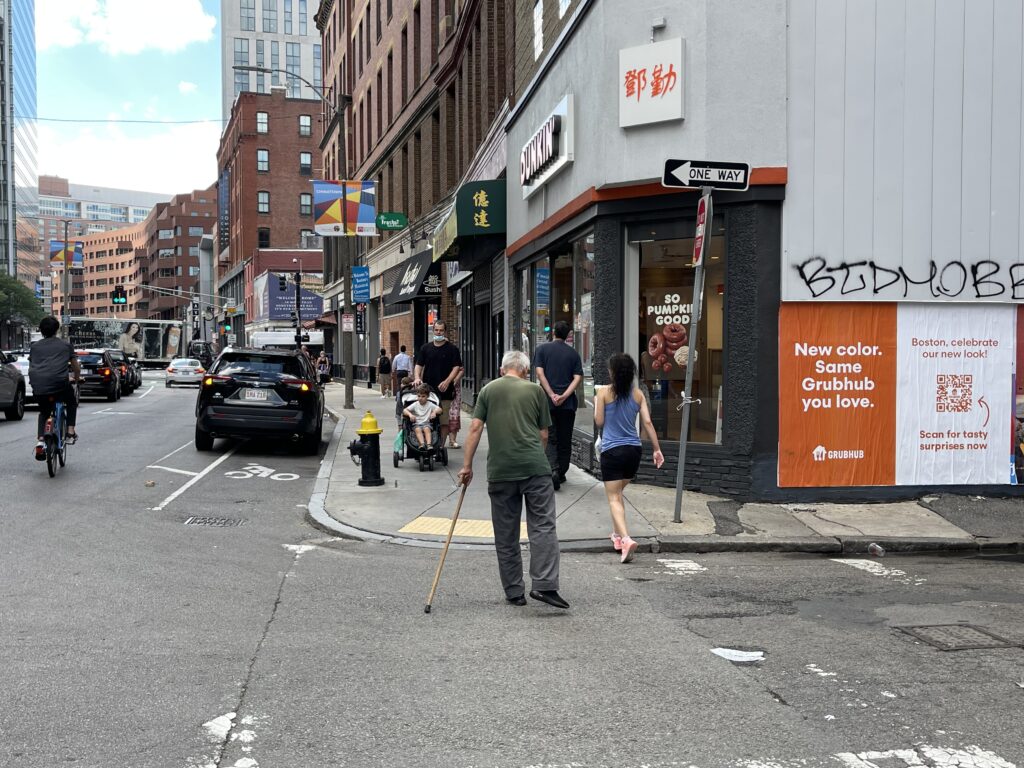
Examples of Wild Posting® Campaigns We've Run in Boston
Bird "Fly for Free" — Downtown Seattle / Pioneer Square edge
Bird ran a first-ride acquisition campaign across Downtown Seattle’s West Edge corridor, anchoring on the Marion + Post corner across from the historic Colman Building. The creative paired a QR code routing to bird.co with a SPRINGCHICK promo code for attributed first rides — dual measurement that tied wild posting directly to app installs and ride starts. The neighborhood mix was chosen for commuter throughput: this stretch of Downtown sits on the daily walk between Pike Place Market and Pioneer Square, with apartment density above and tourist foot traffic below. For brands using wild posting as a performance channel rather than a brand-awareness channel, Bird’s campaign is the proof: QR scans and promo redemptions both reported back into the same dashboard as paid digital, at a CPA the media plan could compare line-for-line.
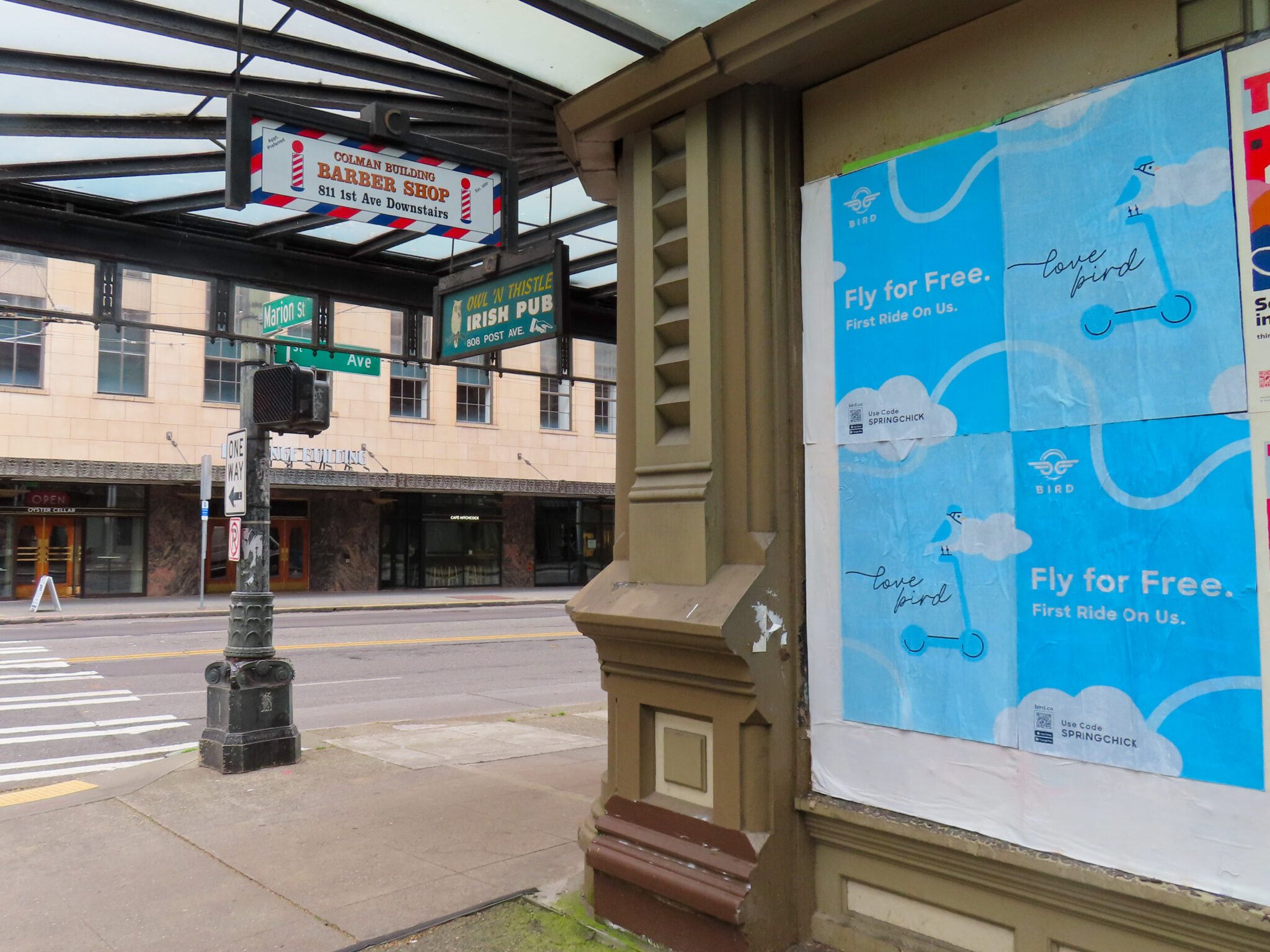
Wild Posting Boston Seaport — FM Championship LPGA Megan Khang
FM Championship LPGA “Boston, the LPGA is Back” Wild Posting® campaign installed at Boston Wharf Road and Autumn Lane in the Seaport — a high-foot-traffic corridor surrounded by waterfront offices, hotels, and restaurants, putting the tournament in front of Boston’s professional and decision-maker audience in the weeks leading up to the August 29 – September 1, 2024 event at TPC Boston.
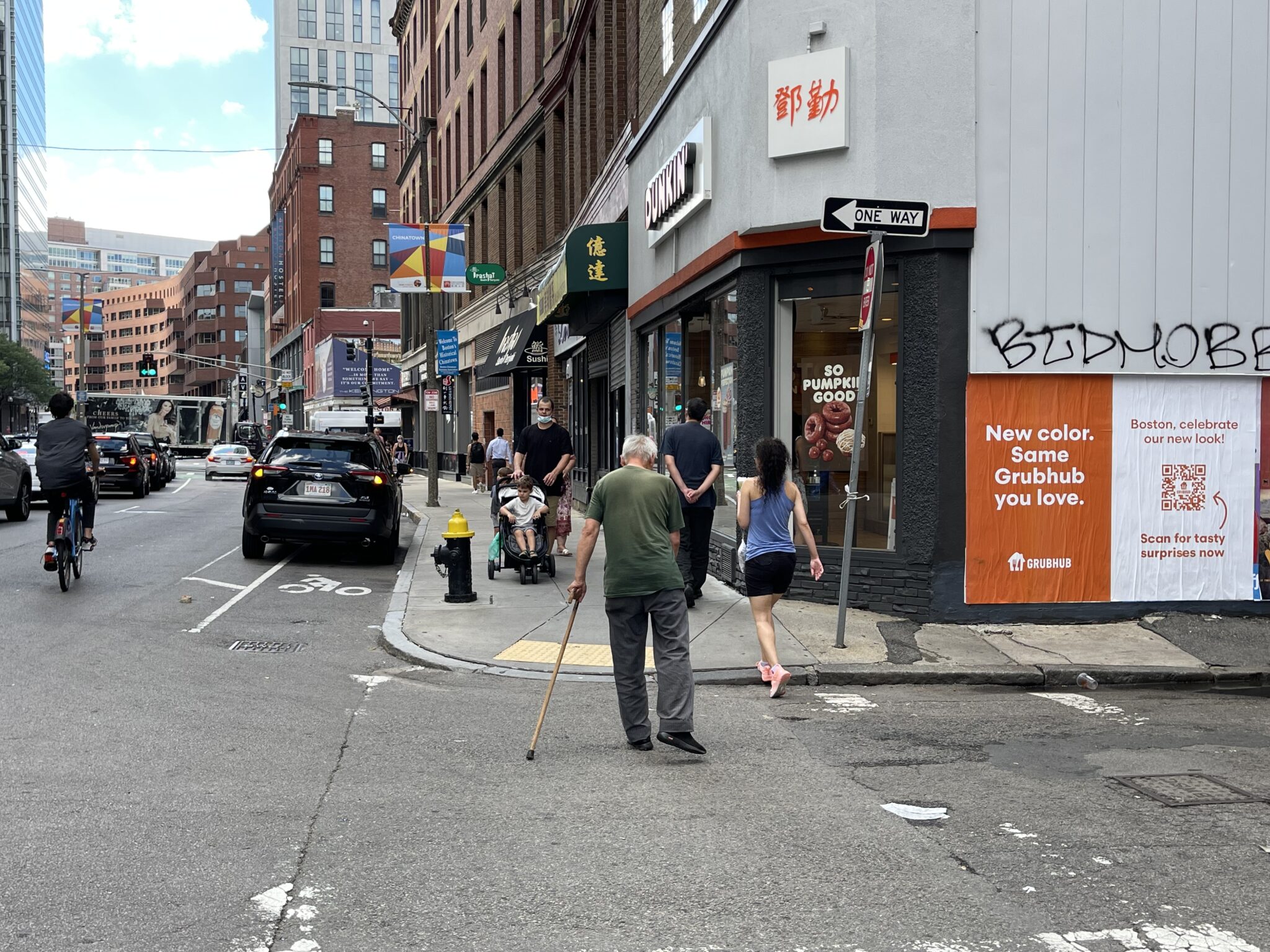
Wild Posting Boston Chinatown — Grubhub Rebrand Campaign
Grubhub “Boston, celebrate our new look” rebrand Wild Posting® campaign installed at Kneeland Street and Knapp Street in Boston’s Chinatown — a high-foot-traffic corridor between the Theater District, Tufts Medical Center, and South Station, with QR code activation driving installs from the daily commuter and tourist flow.
Frequently Asked Questions About Wild Posting® in Boston
How much does Wild Posting® cost in Boston?
How much does Wild Posting® cost in Boston?
Pricing ranges from $2,500 to $8,000+ per campaign in Boston, depending on neighborhood, surface count, and duration. Value neighborhoods like Allston-Brighton, Jamaica Plain, and East Boston run $2,500–$3,500. Core corridors like Fenway, South End, Cambridge, and Somerville run $3,500–$5,000. Premium corridors like Newbury St / Back Bay, the Seaport, and Harvard Square run $5,000–$8,000+.
Where are the best neighborhoods to run Wild Posting® in Boston?
The highest-impact Boston Wild Posting® neighborhoods are Newbury St / Back Bay for fashion and beauty, Allston-Brighton for streetwear, music, and college-aged audiences, Harvard Square / Cambridge for academic and prestige brands, Fenway / Kenmore for sports, music, and entertainment, Somerville / Davis Square for indie and art-forward brands, the Seaport / Innovation District for tech and luxury, the South End / SoWa for design-led DTC, and Downtown Crossing / Faneuil for maximum tourist reach.
Is Wild Posting® legal in Boston?
Wild Posting® in Boston operates across permitted construction barricades, scaffolding, and tolerated postering surfaces. DASH TWO secures necessary permissions, works directly with property owners, and ensures every campaign complies with the City of Boston’s Inspectional Services Department (ISD) sign regulations and local ordinances.
Do I need a permit for Wild Posting® in Boston?
Many Boston surfaces require permits or property-owner agreements, and the City of Boston ISD enforces sign regulations. DASH TWO handles all permissions, property-owner negotiations, and compliance — you don’t see any of it, it just works.
How long does a Wild Posting® campaign run in Boston?
Boston Wild Posting® campaigns typically run 2 to 4 weeks. High-traffic corners get covered fast — for campaigns that need to stay visible, DASH TWO refreshes surfaces weekly so your brand is the one people see. Winter months call for tighter install windows and adhesive selection that holds in cold, wet weather — something we plan for upfront.
Why use a professional company for Wild Posting® in Boston?
Boston Wild Posting® is an operations problem — posters get covered, torn down, and competed for surface by surface, especially in dense walkable corridors like Newbury St, Harvard Square, and Lansdowne. A professional company knows which surfaces stay up, which property owners are cooperative, which crews to use, and which posters to refresh mid-flight. DASH TWO also models expected impressions per surface so you know what you’re paying for before you commit.
Ready to Run Wild Posting® in Boston?
Contact us with your timing, budget, and target audience. We’ll come back with a neighborhood plan, surface count, and impression model within 48 hours — no obligations, no decks you have to sit through.
United States Markets

Digital and Outdoor Advertising Agency. Expertise in the science of digital and the art of the outdoor.
214 S. Locust St. #200
Inglewood, CA 90301
Services
Resources
Copyright 2026 © DASH TWO, INC. All rights reserved.