
Fan club billboards have taken over Seoul — and they’re about to do the same in Los Angeles. Fans of any genre pool their money to buy an outdoor ad honoring a favorite artist. In LA, a fan club billboard runs anywhere from about $1,500 for street-level media to $100,000+ for a premium entertainment-district takeover, depending on location and format. Plan to book roughly six weeks ahead to allow for production, proofing, and posting — though you can fast-track a board for BTS’s upcoming shows at SoFi Stadium. Here’s how the trend got hot, and exactly how to buy one yourself.
From Seoul Subways to a Global Movement
Social media made fans feel personally close to their idols. Decades ago, supporters wrote fan letters; today they want bigger, public displays of devotion. The billboard version started in South Korea, where K-pop fan clubs began buying ad space in Seoul subway stations around 2014, usually to mark a member’s birthday or a new release. To cover the cost, fans crowdfund — pooling thousands of dollars through group-buying platforms.
The trend exploded: fan-funded ads in Seoul jumped from just 76 in 2014 to 1,576 in 2018 and reached 2,166 in 2019 — a roughly 28-fold increase in six years.

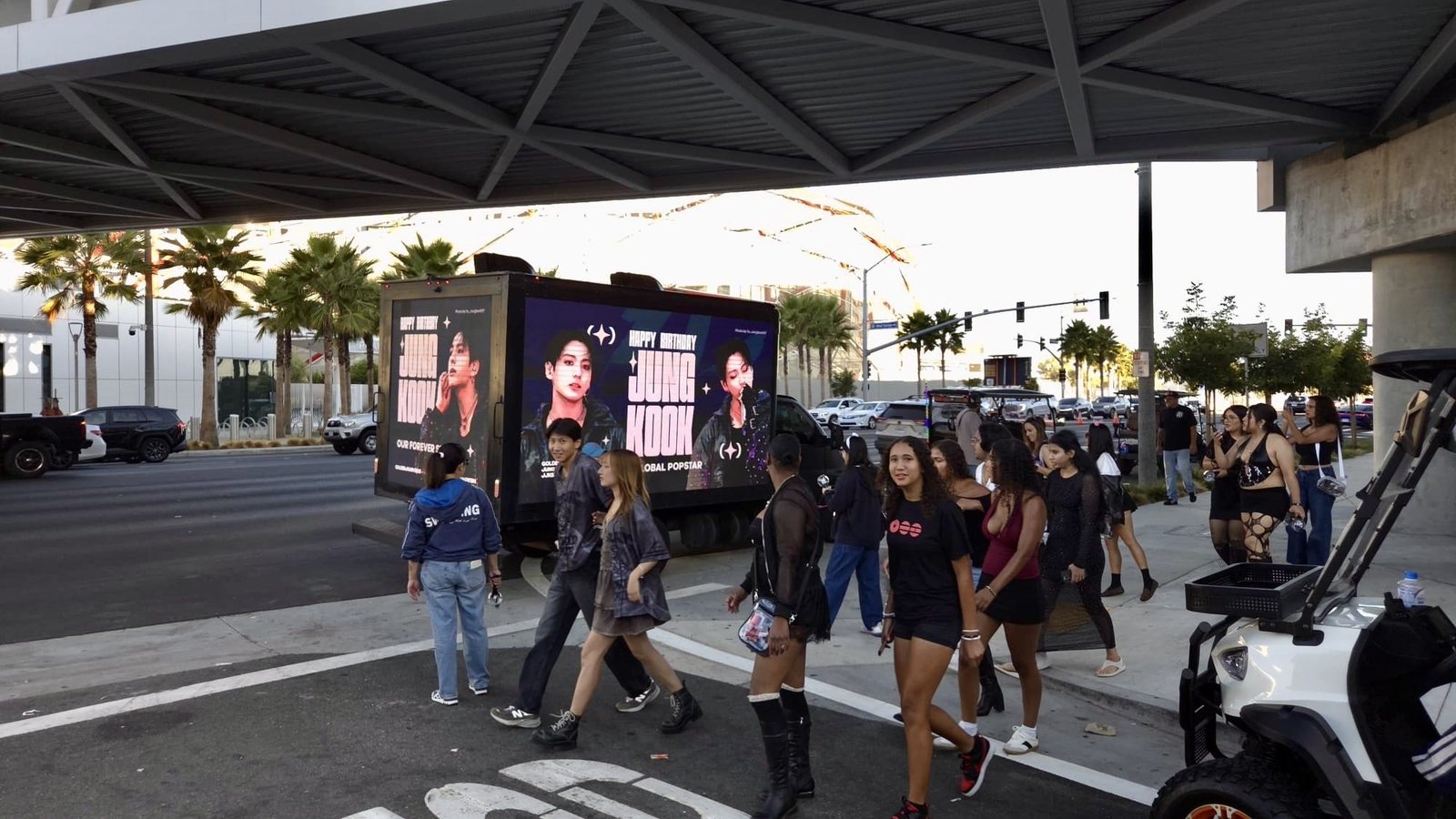
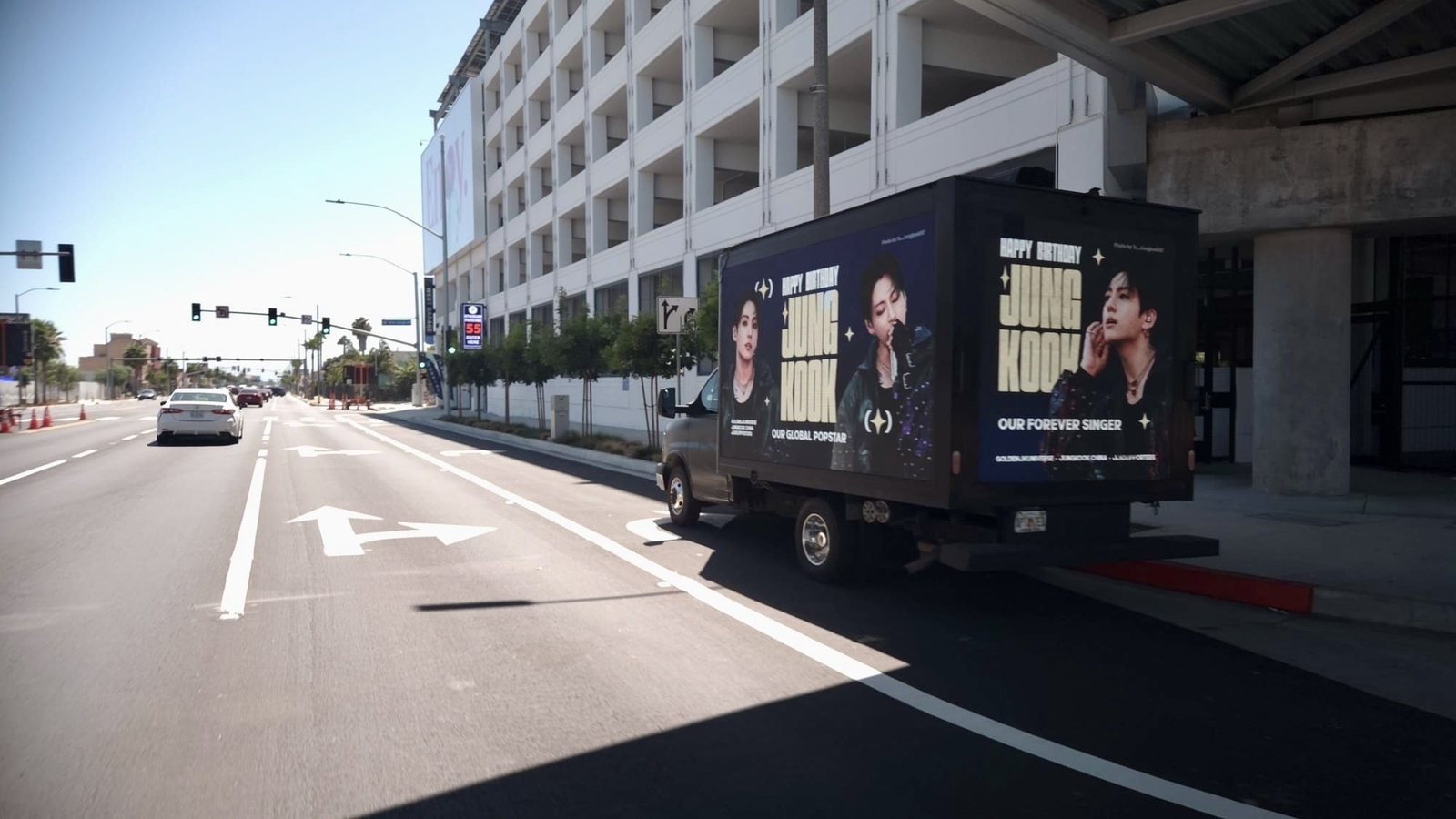
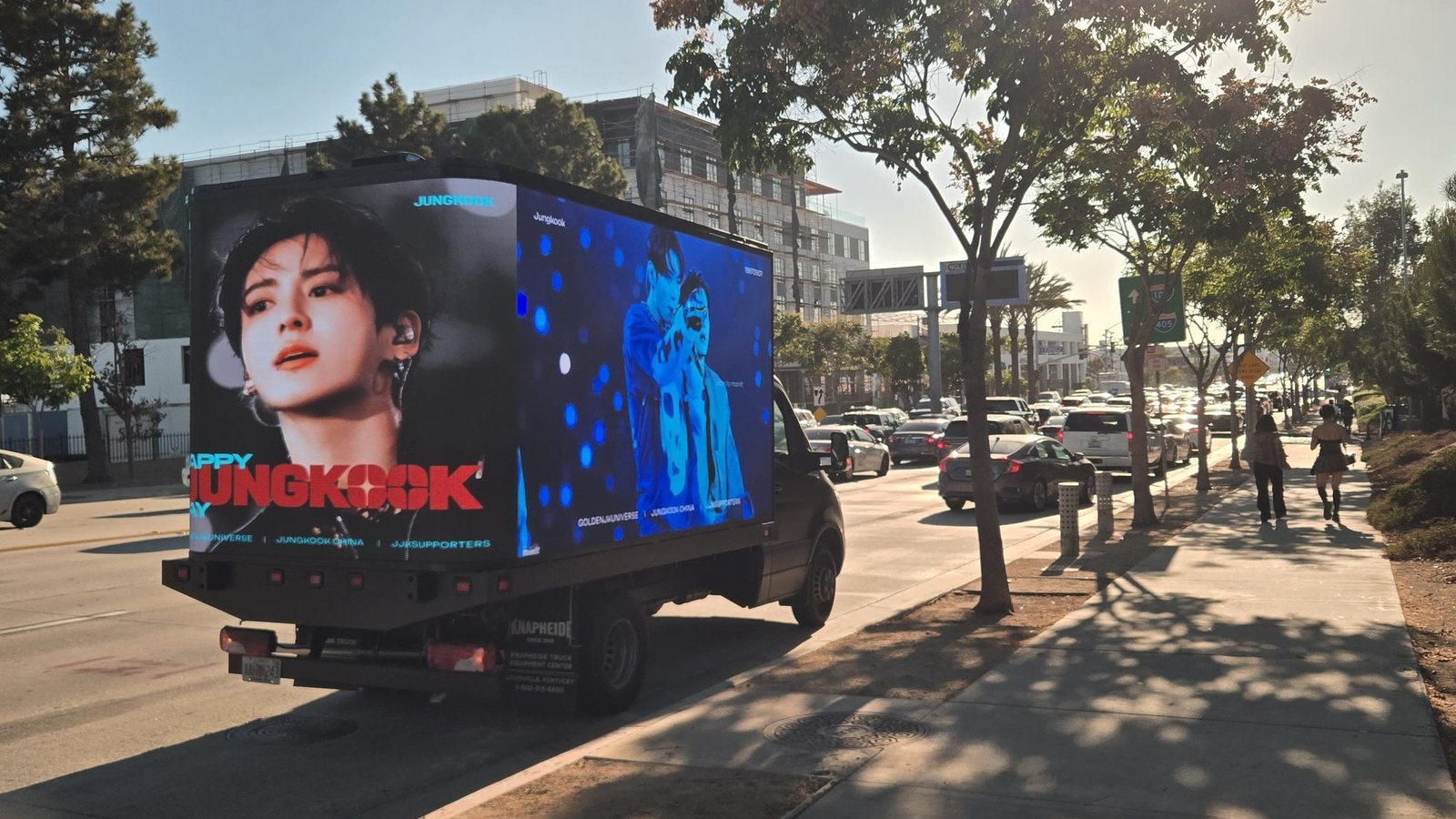
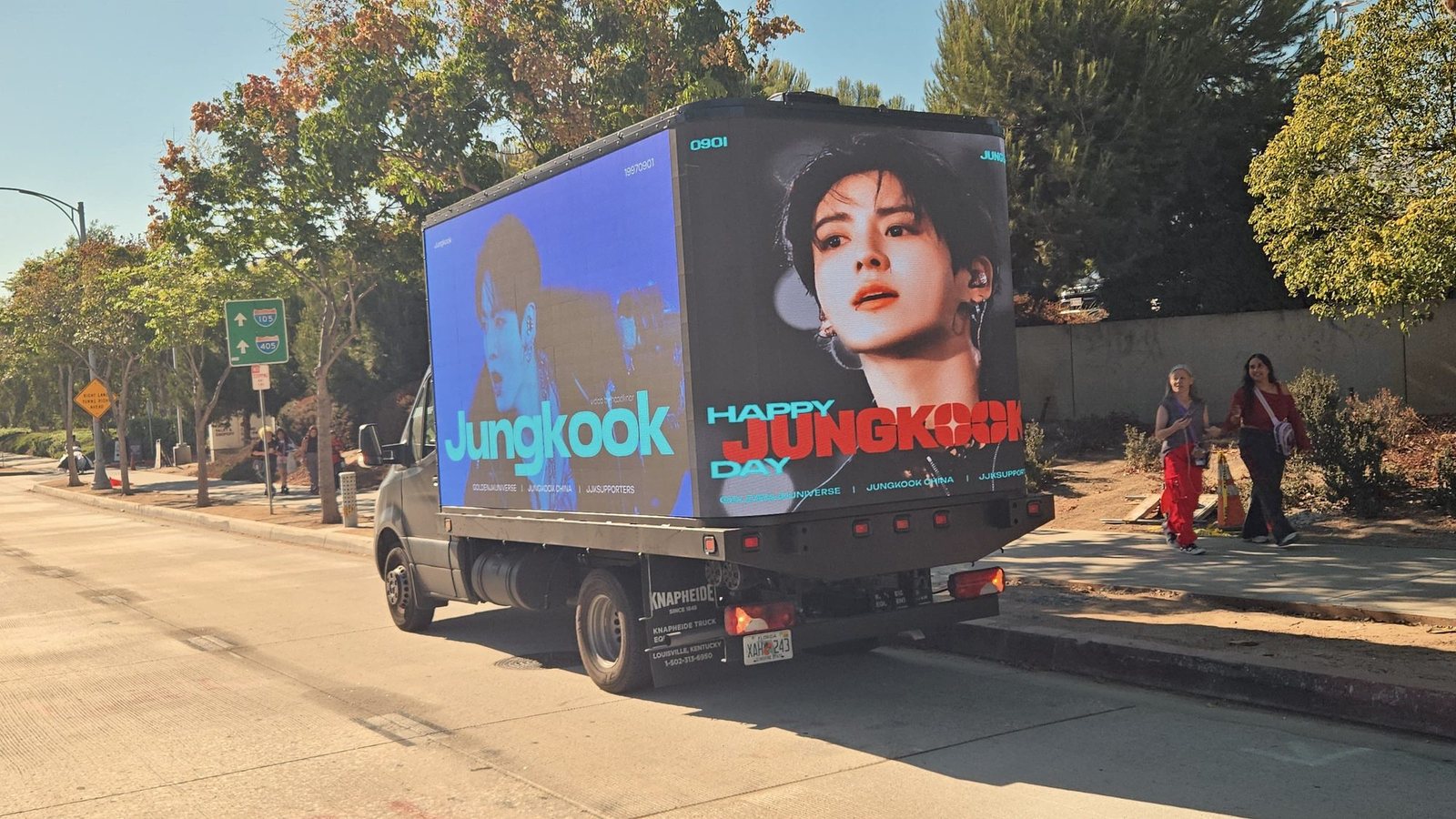
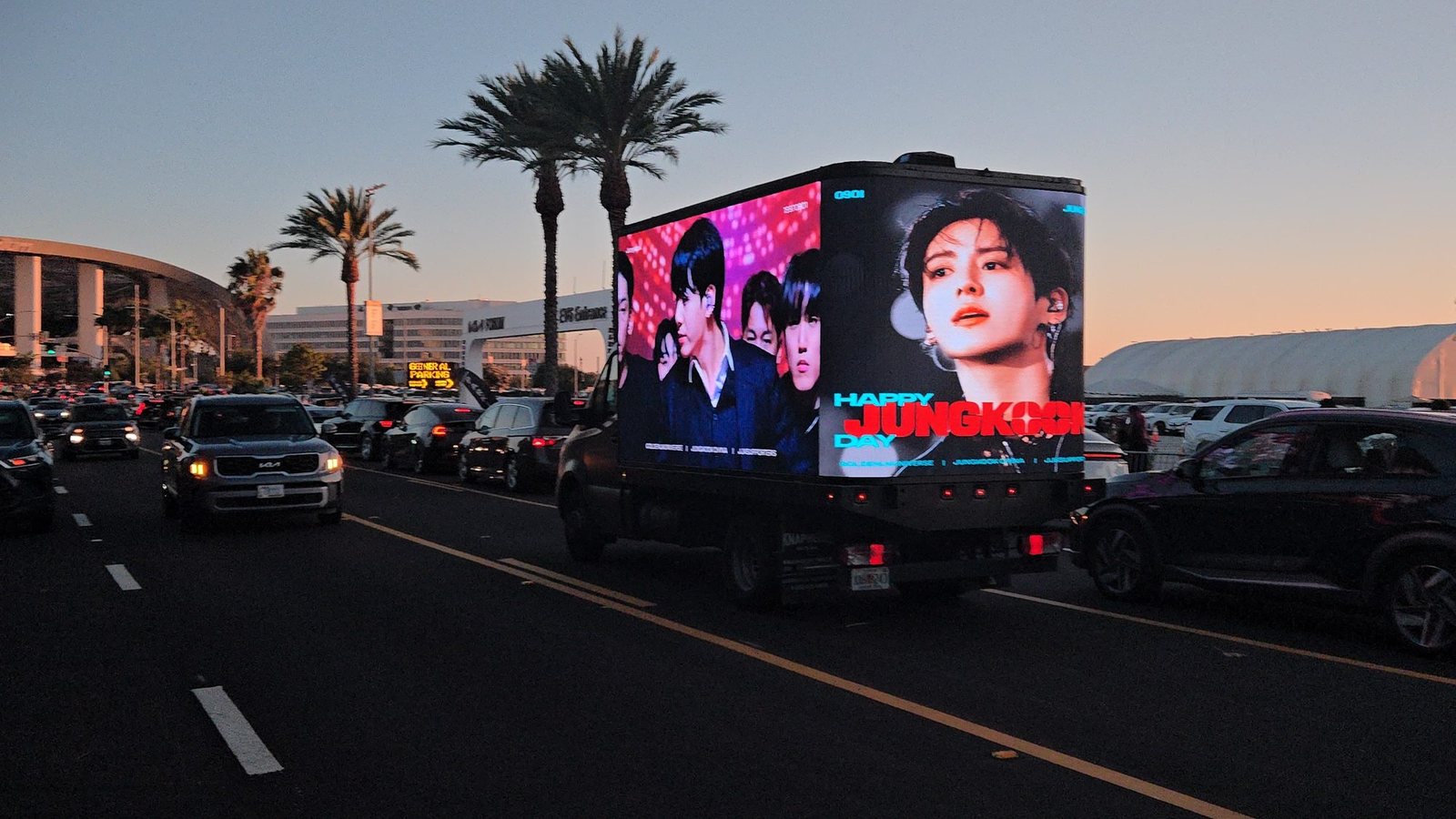
Fan-funded LED billboard trucks bring the Seoul-style idol tribute to the streets of Los Angeles.
Why Fan Club Billboards Work
They work because everyone wins. Fans get to show their allegiance publicly, and the artist gets visible proof of how big their fandom is. The idols pictured often visit the board to take a selfie and post it — closing a loop that turns a paid placement into earned social reach. That payoff is exactly why the tradition spread far beyond Korea.
How the Trend Reached America
By late 2017, fans in Peru crowdsourced a billboard for BTS member Jin’s birthday. On August 1, 2018, fans bought a Times Square board to mark the anniversary of Park Seo-joon’s debut — making him the first South Korean actor on a Times Square digital screen. That placement, on the NASDAQ tower at about 15 seconds per hour for a week, cost roughly $30,000. Times Square fan ads have been climbing ever since, and the center of gravity is now shifting west, to Los Angeles.
Billboard Formats & Costs in Los Angeles
With the BTS world tour hitting Los Angeles September 1–6, there’s still time to put up a board for your favorite group. Here’s a rough guide to LA outdoor options and what they run — ranges, not quotes, since rates move with location, demand, and timing (and spike hard around a tour like this). For the bigger picture, see our guide to how much a billboard costs.
| Location / format in Los Angeles | Estimated cost (per 4-week cycle) |
|---|---|
| Mobile LED billboard truck | $2,500+ per day (routed by the hour — popular for release days and concert nights) |
| Digital bulletin near SoFi | $5,000 – $15,000+ (rates spike sharply during major tours and sporting events) |
| Static bulletin | $2,500 – $25,000 (arterial roads are cheaper; 405-freeway placements hit the top tier) |
| Transit shelters (Century/Manchester approach) | $1,500 – $3,500 per shelter (commuter paths toward Inglewood command premium street-furniture rates) |
| Wallscape | $12,000 – $60,000+ (neighborhood units run lower; premier building wraps require premium commitments) |
| Sunset Strip digital | $15,000 – $100,000+ (iconic, full-motion entertainment zone at the city’s highest rates) |
Digital bulletins are software-controlled, so you can schedule creative to change by the day — a “Welcome to LA” message one night, a birthday tribute the next. (More on that in our programmatic DOOH guide.) For a market overview, see our LA billboards page.

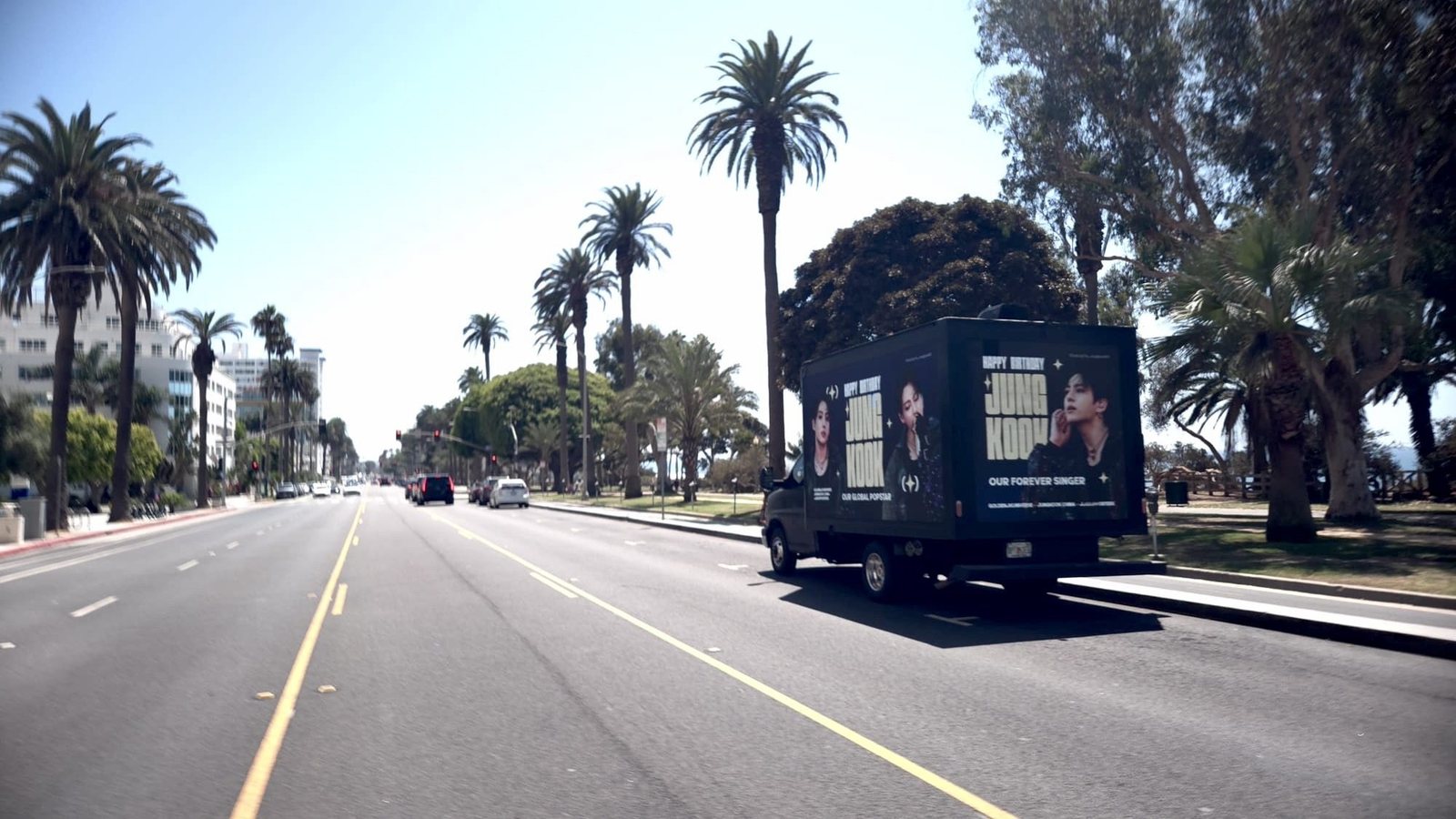
A “Happy Birthday Jungkook” mobile LED billboard drawing a crowd on a Los Angeles street — a DASH TWO fan campaign.
See the format in action: our K18 billboard-truck tour across Los Angeles shows how a mobile LED campaign blankets the city.
Timeline: Book 6–8 Weeks Out
We generally recommend booking six to eight weeks ahead to leave room for the three Ps:
- Production — concepting and building the ad, plus any changes to wording or imagery.
- Proofing — inspecting the final art to confirm it’s ready to run.
- Posting — physically installing the board (or scheduling the digital play).
Digital moves faster. If you’re pressed for time, a board can go up in a week or two — but the earlier you lock it in, the better your placement.
Image Rights & Licensing: Get This Right First
This is where fan campaigns get tripped up. You cannot use official music-video screenshots, album artwork, or master audio — those are owned by the label and artist. A compliant fan board uses original fan art, royalty-free assets, or licensed fan-site photography used with the photographer’s explicit written permission. Clearing rights up front protects the campaign from takedowns and keeps the vendor comfortable putting the creative up.
Fundraising & Payment: Consolidate the Backend
Crowdsourcing a board through a loose X/Twitter community sounds seamless, but it tends to implode at payment. A campaign that actually posts consolidates the backend:
- Appoint one point of contact — a group leader running a proper group-buying/crowdfunding setup (Pledge, Tiltify, or a formal LLC/unincorporated association).
- Take one invoice covering ad space, production, and LA taxes, matching the legal entity on the insertion order.
- Hold pooled funds in one escrow or master account tied to a single card or wire origin.
This is also the case for working with an agency instead of a marketplace: one team, one contract, one bill. Here’s the difference between a billboard agency and a vendor.
Choose the Right Photo-Op Spot
Fan boards are gathering points — for the crowd and sometimes the idol — so you want a place people can safely stop and shoot. Pedestrian-friendly beats highway-adjacent. A vendor will steer you toward the biggest audience number, but your real goal is easy foot access, not raw impressions. It’s a counterintuitive call only an operator would flag.
Frequently Asked Questions
What does a fan club billboard typically cost?
In Los Angeles, roughly $1,500 for local street-level media up to $100,000+ for a premium entertainment-district takeover.
Can you use official music-video screenshots or album audio?
No. Fan campaigns must use original fan art, royalty-free assets, or licensed fan-site photography with the photographer’s explicit permission.
Do you need a permit to gather at the billboard site?
It depends on group size. In LA, casual crowds under about 25 people taking quick photos on a public sidewalk generally don’t need a permit.
If you book a digital board near SoFi for the 2026 BTS tour, can you change the graphic daily?
Yes. Because digital bulletins are software-controlled, you can schedule different creative on specific days — a “Welcome to LA” graphic on August 31 and a birthday message for Jungkook on September 1.
Claim Your LA Fan Billboard Before Spots Sell Out
LA fan-ad inventory is tight around big events, and a BTS run at SoFi is as big as it gets. Contact DASH TWO to buy a board celebrating BTS — or your own favorite group — before the best placements are gone.